

The Google Story
In this website you will find various articles about Google, a company that has dramatically transformed our daily lives! In fact, Google is such a dominant player online, you’d be hard pressed to find anyone who hasn’t used one of the amazing products or services offered by this legendary company. Since Google went public on August 19, 2004, it has greatly expanded its products and services beyond the flagship search engine. According to the latest calculation by Alexa, the most trusted source for commercial website traffic data, Google is the most visited website on the internet.
Consumers use Google’s primary search tool every day to find information on the web, often opting to make Google their default homepage in their browser(s). Google Search is currently available in 123 languages with search results tailored to the users in each country specifically! Besides the primary search tool, Google also offers several specialty search tools as well. These include Google Scholar for searching academic resources, a tool for searching the full text of United States patents, a financial search tool, a shopping search tool, and Google Trends which shows what searches are trending now and in the recent past. All of these search tools can be put to good use for both personal and business purposes.
Google Map has become one of the top destinations on the internet and is one of the top ten most utilized websites on smart phones.
Google for Business
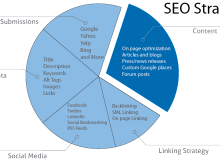
Many businesses use the Google Maps API to integrate Google Map into their website. This can be used to quickly show potential customers how to find a business or where a real estate property for sale is located. Google Map has many layers of utilization including the popular street view, satellite view, and topographic view. Google Map will even map out directions for you between two locations, complete with alternative routes, walking routes, and mass transit routes! Even with all of this, the full utility of Google Map has not yet been realized. Businesses also use SEO or Google Search engine Optimization to help their Google My Business listing get found by prospective clients. An SEO Chicago Company can be hired to help a business’ website rank on Google.
Google News has become one of the important daily aggregators of news stories around the world. In fact, one of the coolest features of Google is the “Google Alert” system, allowing users to follow certain news topics in real time by setting custom keywords to follow. When Google detects a news item containing that keyword, it automatically emails you an alert with a link to the story. This is an excellent tool for keeping abreast of certain people, certain businesses (including your competitors), certain products, and other events as the news unfolds.
Google & YouTube
In 2006, Google bought YouTube, the premiere video streaming site on the internet, and thus expanded its dominance into the video arena. YouTube videos offer users added value they can’t get from written words and static images alone. For example, it can be difficult to envision how a product actually works from a written description and photos, no matter how well the description is written. However, a quick video demonstration uploaded to YouTube is better than a 1000 words. Of course, the entertainment value of YouTube is epitomized in the ever so popular funny pet videos.
Google owns many other highly utilized properties on the web as well. For example, Blogger enables people to build their own blog and/or website in mere minutes. Best of all, Blogger is completely free! Blogger sites range from personal sites such as travel blogs and fan sites to small business sites for entrepreneurs and home based businesses.
Google Adwords
People can use Google’s AdWords service to garner highly targeted traffic to their website(s). This is a very helpful for attracting new customers and/or subscribers to a newsletter. Adwords also comes with the very valuable Google Keyword Tool that cab be used to determine how many times a certain keyword, and related keywords, are search for in a month. Likewise, people can monetize their website(s) by placing Adsense banner units on their site free of charge. In many cases, this more than pays for the hosting fees of hobby sites and some users are able to make a living using Adsense to monetize informational sites.
Google+ has created a mechanism to combine the power of social media networking with online reviews and internet search. While it has not been around as long as review sites like Yelp and CitySearch, this integration is something for which businesses should probably pay closer attention, especially as Google moves more toward delivering more customized and locally relevant search results.
Many users feel that Gmail has better filtering capabilities than all other free web based email services. Most people also agree that Gmail also has a more elegant design than Yahoo Mail and Outlook. Plus, it seems to run faster and be more reliable than Yahoo Mail, which has experienced significant down time over the last year.
Google Webmaster Tools
Anyone with a website should be using Google Webmaster Tools to monitor the performance of their website in the Google search engine and make improvements. This is not a single tool but rather an entire suite of tools, most of which are not currently being used by people who are using Google Webmaster Tools to some degree. For example, Fetch as Googlebot allows one to instruct Googlebot to crawl your site at a specific time, yet few people seem to know about it! In addition, it allows you to see your webpage as Googlebot sees it. This can give you an idea of whether or not you should tweak the coding on your webpage.
Google has many other extremely useful services that are also underutilized at this point. For example, Google Translate allows one to easily translate single words, phrases, sentences, or even entire webpages from one language to another. This amazing service currently supports more than fifty languages. Google Docs allows for the easy sharing of documents through a friendly user interface and cloud server.
Google Industrial
Somewhat behind the scenes, Google has invested heavily in many worthwhile offline projects such as setting up a vast array of solar panels on an old oil field north of Los Angeles California and many other clean energy projects. Recently, it was announced that Google has invested $300 million dollars in a trans-Pacific underwater high speed internet cable that will connect the west coast of the United States with Japan. We will shed some additional light on these types of Google endeavors too and how they may impact the internet and the world at large in the future.
Finally, you should bookmark this site now and check back with us frequently as the site will be continually updated. The Google articles you will find on this website will help you find new and innovative ways to use Google’s products and services in both your personal life and in your business(es). Google is a powerful partner to have in both and it looks like things are destined to become even better in the near future. Stay tuned!